

Categories
real estatePublished June 30, 2026
Why So Many St. Louis Homes Aren't Coming to Market

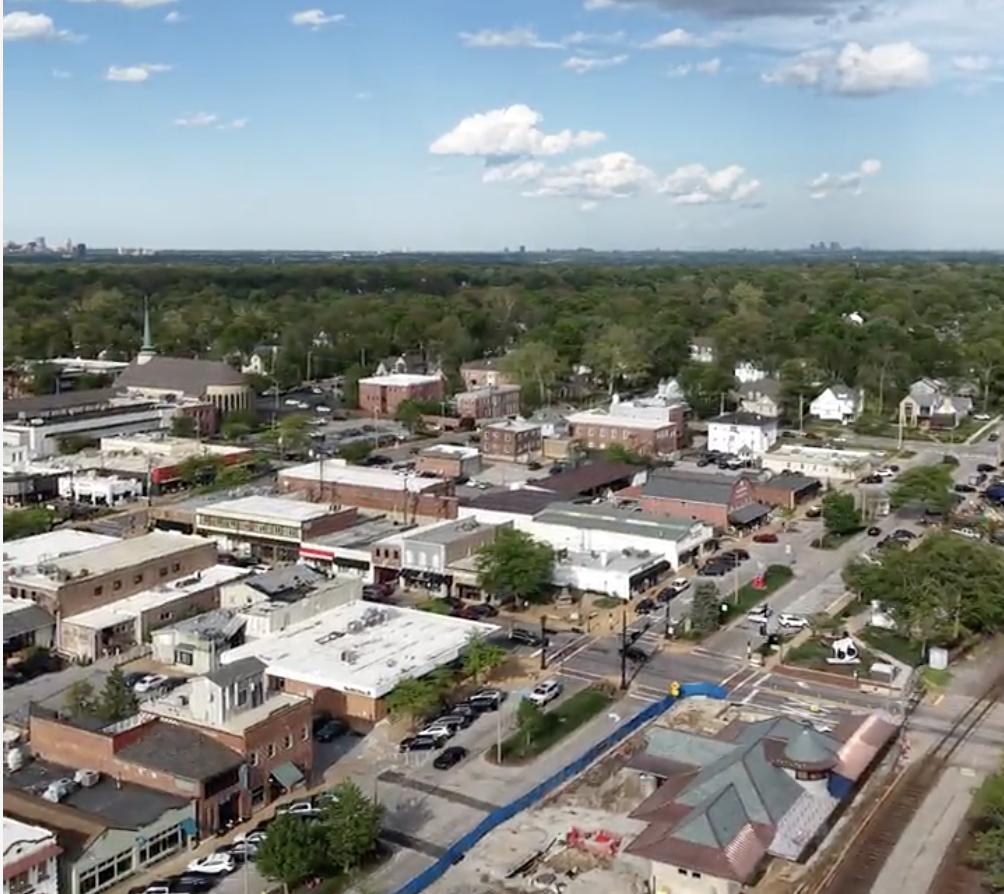
Why So Many St. Louis Homes Aren't Coming to Market and a Bipartisan Fix Sitting in Congress
If you've shopped for a home in St. Louis County over the past year, you already know the frustration: tight inventory, multiple offers, and homes that feel like they're gone before you can schedule a showing. St. Louis County's months' supply has been sitting around 1.9 to 2.4 months, well below the 5-to-6-month level that defines a balanced market. Meanwhile, prices keep climbing, with the broader metro posting roughly 8–10% year-over-year appreciation in recent reporting.There are a lot of reasons for this; mortgage rate lock-in, slower new construction, strong demand from out-of-state buyers drawn by relatively affordable prices. But there's one driver that gets far less attention than it deserves: a 28-year-old federal tax rule that's quietly keeping inventory off the market in communities across the region.
The 1997 Problem
When Congress created the current capital gains exclusion on primary home sales back in 1997, it set the limits at $250,000 for single filers and $500,000 for married couples. The goal was to shield ordinary homeowners from owing federal tax just for selling the house they'd lived in for years.The catch: Congress never indexed those numbers to inflation. Not once in 28 years. Adjusted for inflation, those 1997 thresholds would be worth closer to $475,000 for single filers and $950,000 for married couples in today's dollars. Instead, they've stayed frozen while home values across the country, and especially in St. Louis's most desirable school districts, have climbed dramatically.
What That Looks Like in Kirkwood and Webster Groves
Take Kirkwood as an example. Home values there have climbed more than 43% in just the past five years, with the median now sitting around $567,000. A homeowner who bought a modest house there in the mid-1990s for $175,000 to $200,000 could easily be sitting on a sale price north of $500,000 today. Webster Groves tells a similar story, with homes often selling in under five days and routinely above asking price.For a single homeowner; a widow or widower, say, whose kids are long grown and who's ready to downsize, gains above $250,000 trigger a real federal tax bill, on top of Missouri state income tax. For many, the math simply doesn't work. So instead of selling the four-bedroom house to a young family who'd love the schools and the neighborhood, they stay put.
This isn't a hypothetical. Nationally, an estimated 13 to 29 million homeowners (depending on the data source and how gains are measured) already have appreciation exceeding current exclusion limits, and that number is projected to keep growing. The National Association of Realtors estimates that without reform, a majority of homeowners could exceed these thresholds within the next several years.
A Bipartisan Bill Already on the Table
The fix isn't complicated, and it isn't waiting on some future Congress to dream it up. The More Homes on the Market Act (H.R. 1340 / S. 3332) introduced by Representatives Jimmy Panetta (D-CA) and Mike Kelly (R-PA) would double the exclusion limits to $500,000 for single filers and $1 million for married couples, and index both figures to inflation going forward so this problem doesn't quietly rebuild itself over the next three decades.The bill has 94 cosponsors from both parties and support from the National Association of Realtors and tax policy groups across the ideological spectrum. Analysts at Moody's Analytics have suggested that updating the exclusion could unlock hundreds of thousands of homes nationally , exactly the kind of release a market like St. Louis's, with its sub-2.5-month supply, could use.
Why This Matters for the Whole Region
Congress recently passed the 21st Century ROAD to Housing Act, a meaningful step on affordability but capital gains modernization wasn't part of it. That's an open door, not a closed one. The next tax or housing legislative vehicle is the place to include this fix.For a region like greater St. Louis, where entry-level buyers in Affton, Ferguson, and St. Charles County are competing for scarce inventory while four-bedroom homes in Kirkwood and Webster Groves sit underused, this isn't an abstract policy debate. It's about whether the homes that already exist in our best school districts and most walkable downtowns get a chance to house the next generation of families who want to be here.
If you'd like to weigh in, contacting your U.S. Representative and Senators directly is the most effective way to make sure this gets included in the next round of tax legislation.

The Collective Team
Director of Operations | The Collective | Keller Williams | PLACE
or another way
Verified by Primpted